Latha Eadar-nàiseanta nan Cànan Màthaireil ’26
Internationaler Tag der Muttersprache ’26
International Mother Language Day ’26
[Gàidhlig]
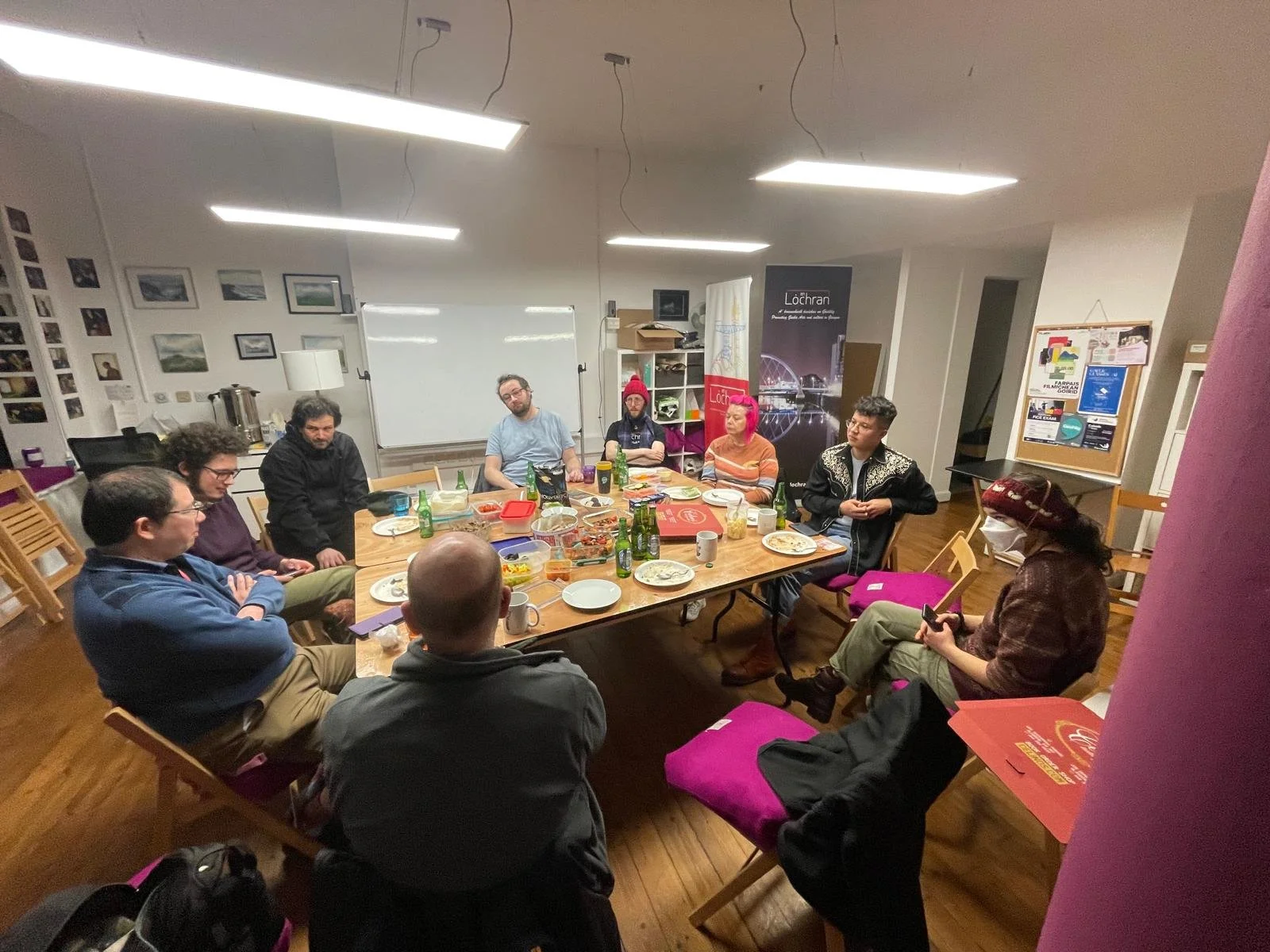
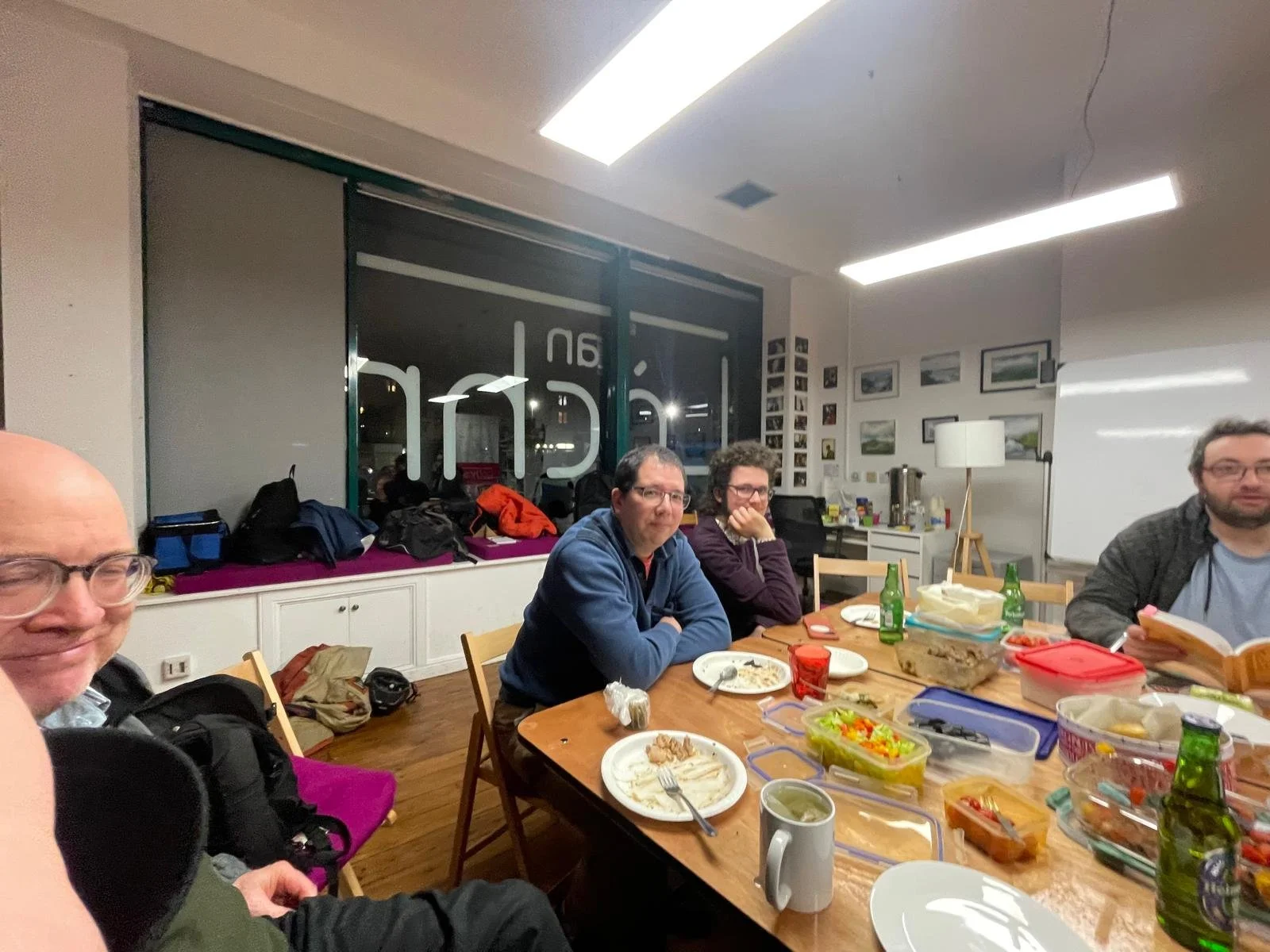
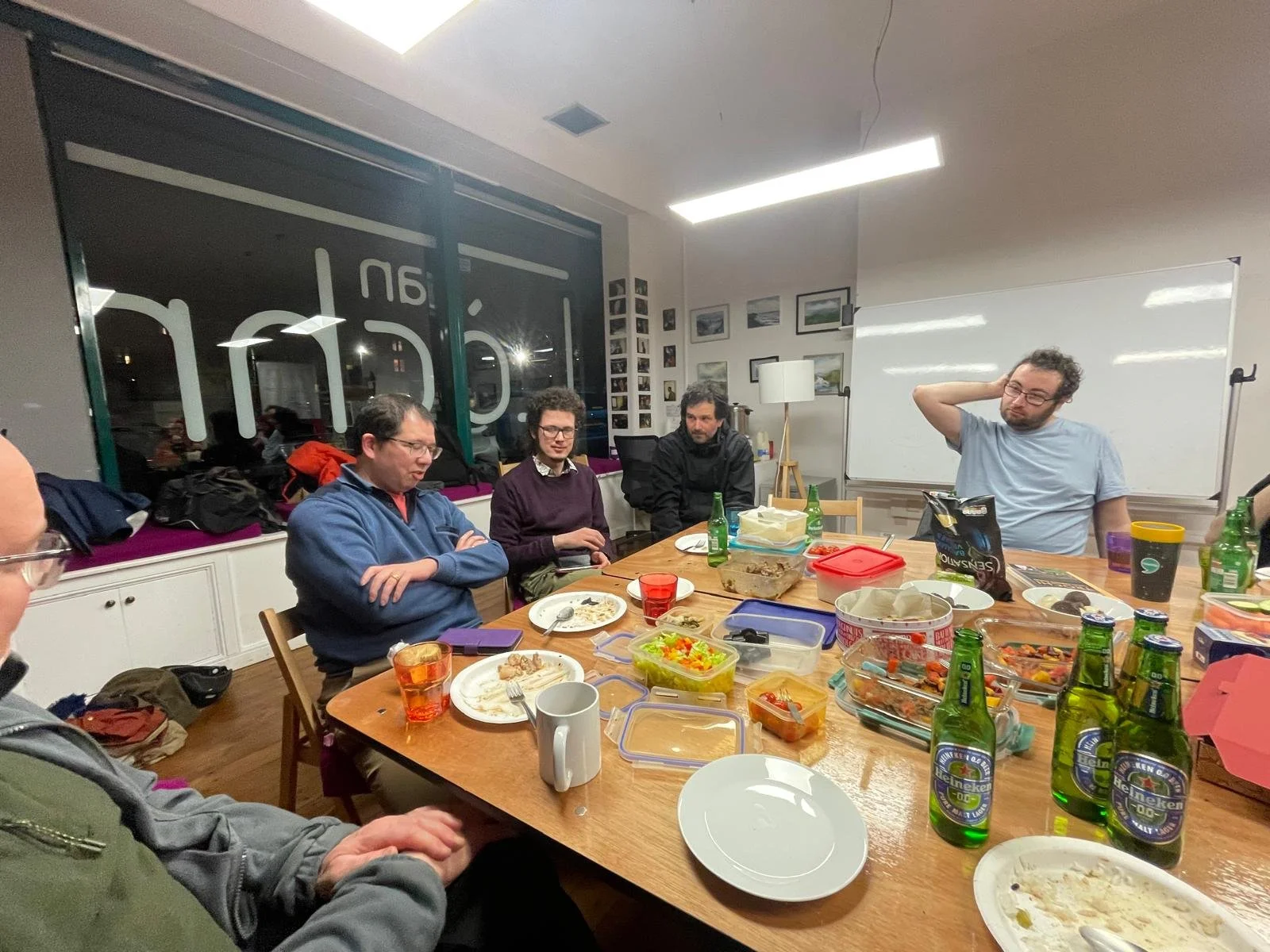
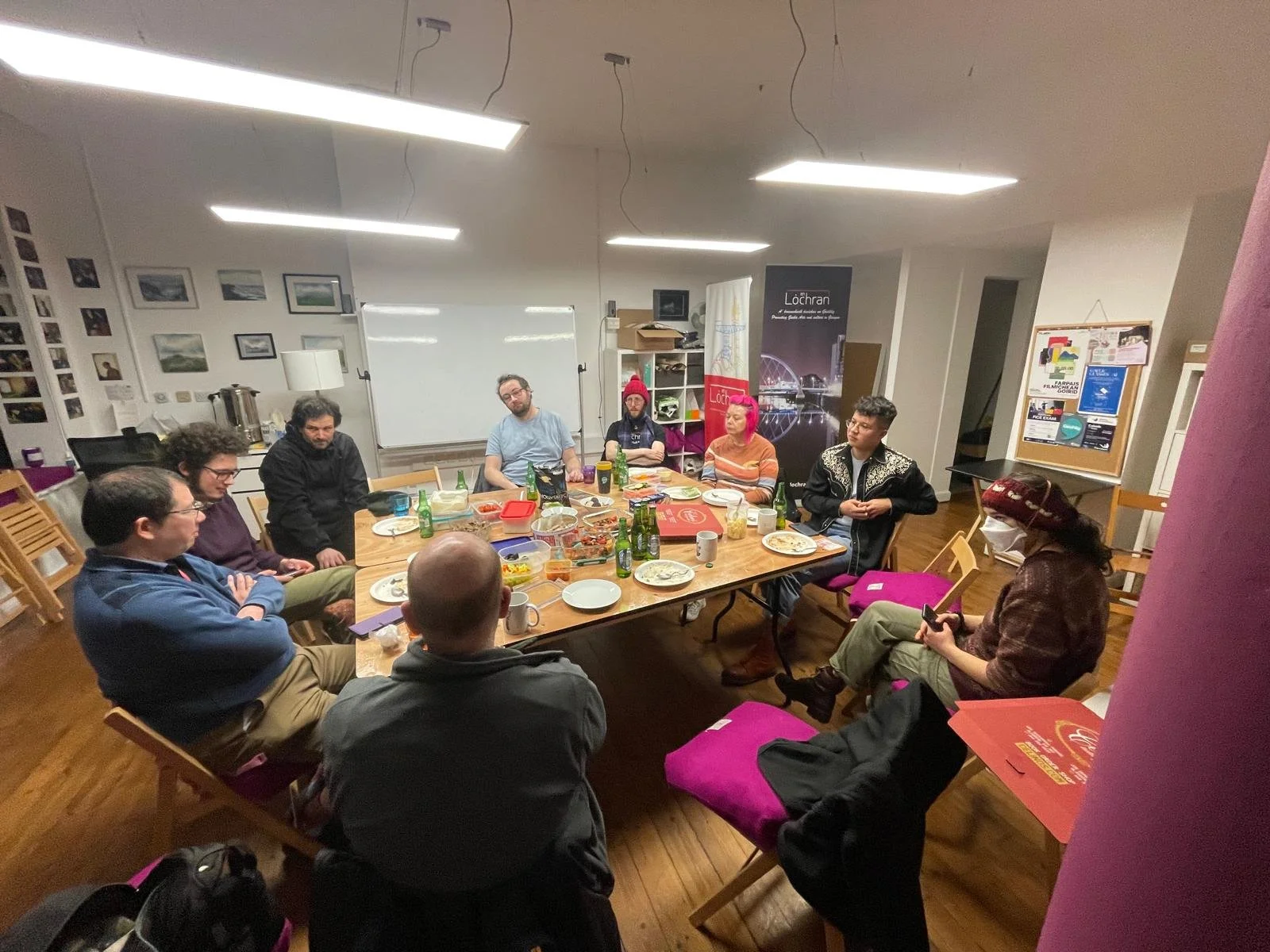
Disathairne, an 21mh dhen Ghearran, chomharraich sinn Latha Eadar-nàiseanta nan Cànan Màthaireil aig An Lòchran! ’S e amas an latha seo iomadachd chànanach is chultarail a bhrosnachadh.
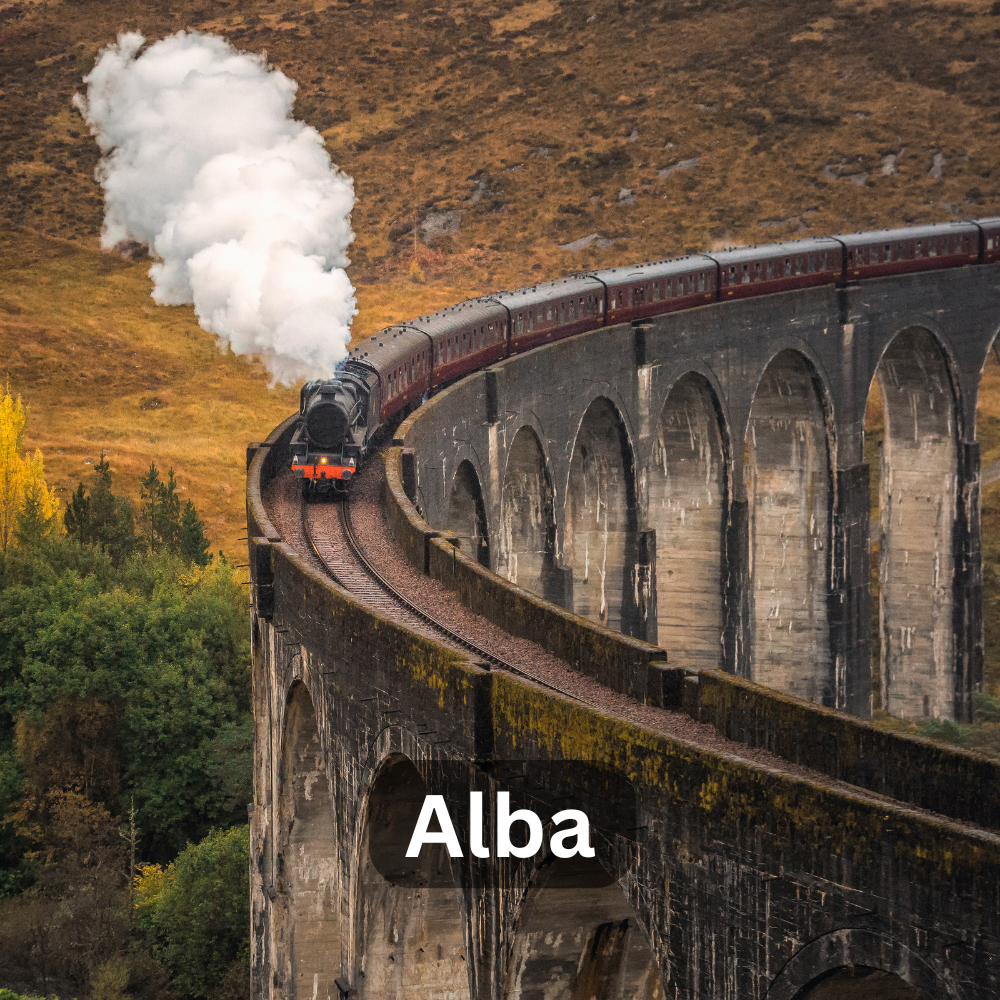
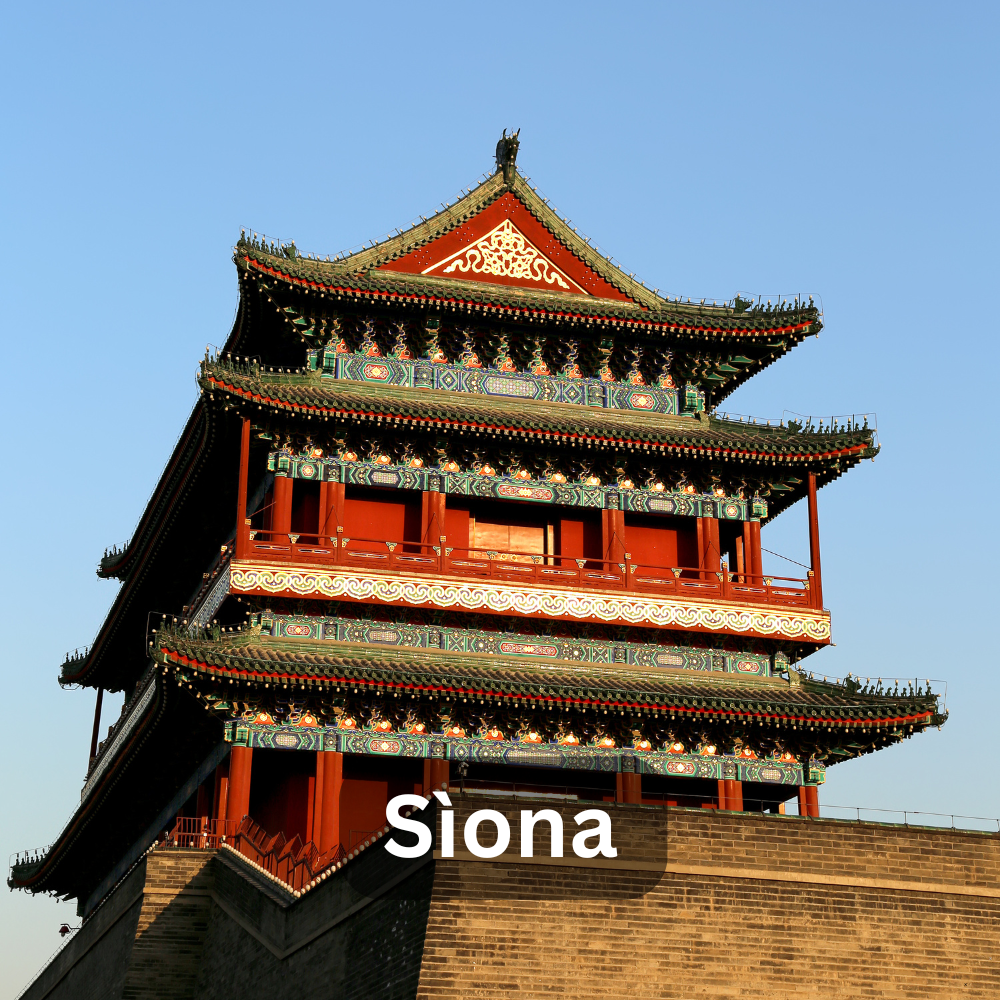
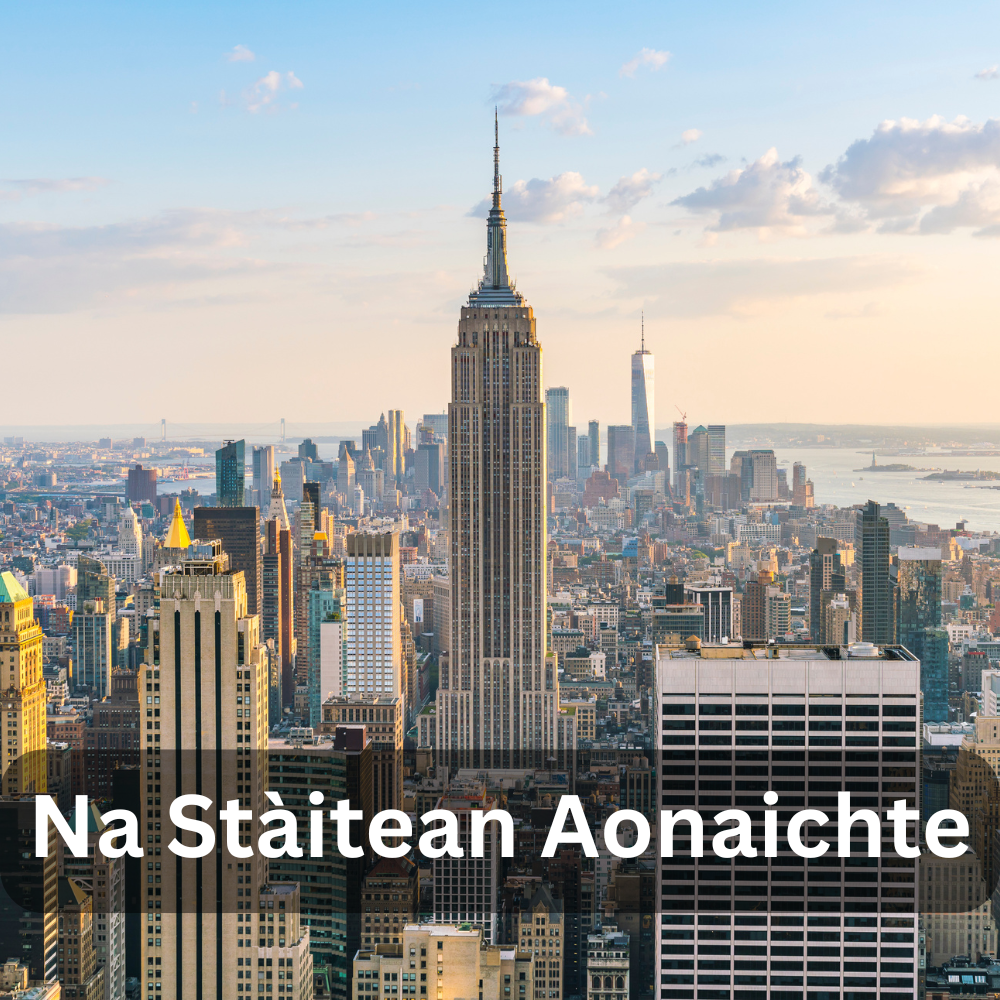
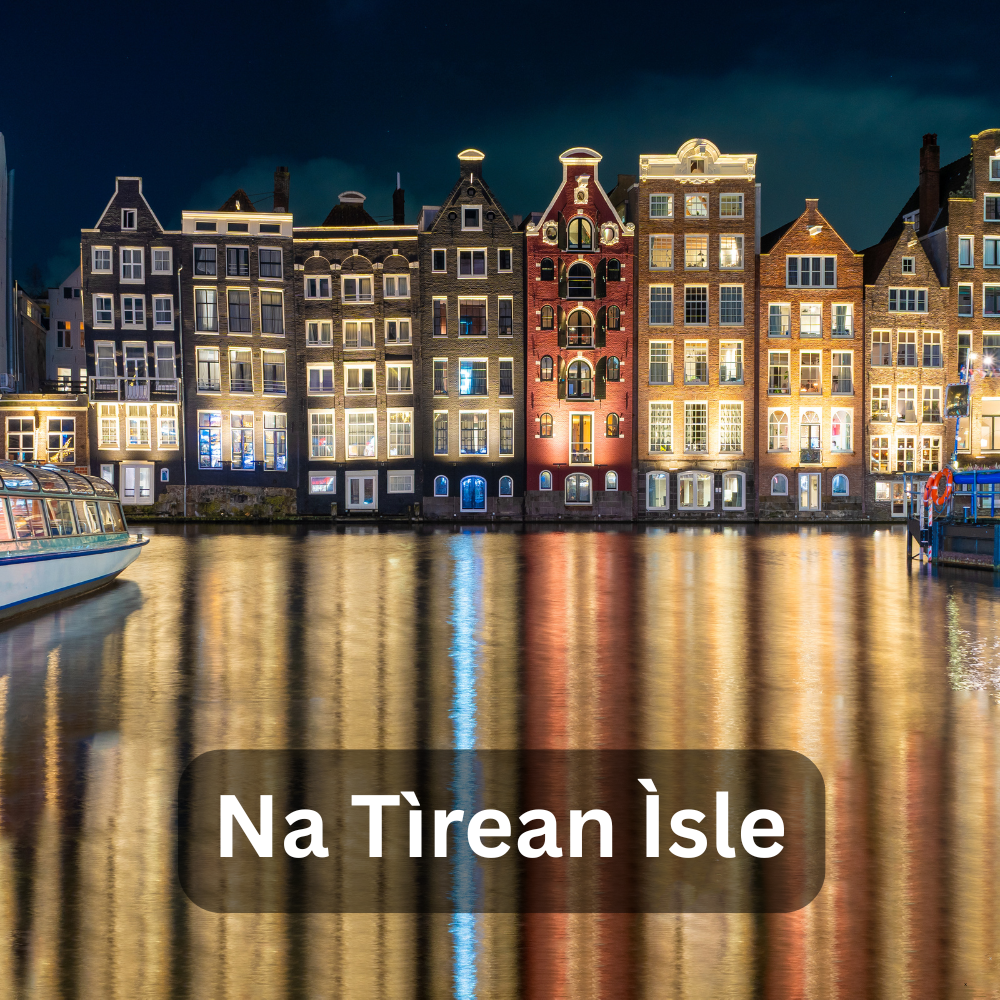
San t-seagh sin, thug a h-uile duine leis biadh agus/no deochan a bhuineas ris na dùthchannan no cultaran aca fhèin. Seo na dùthchannan às a bheil na h-aoighean a bha an làthair:
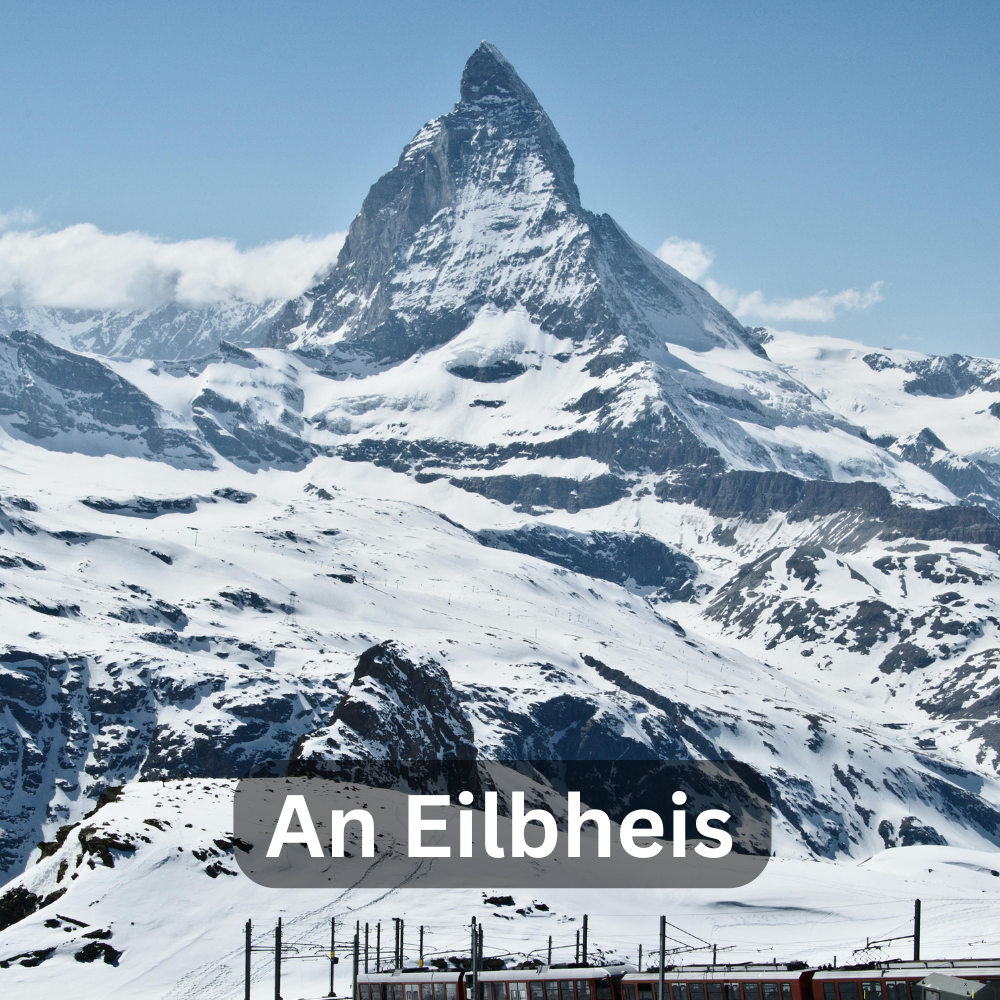
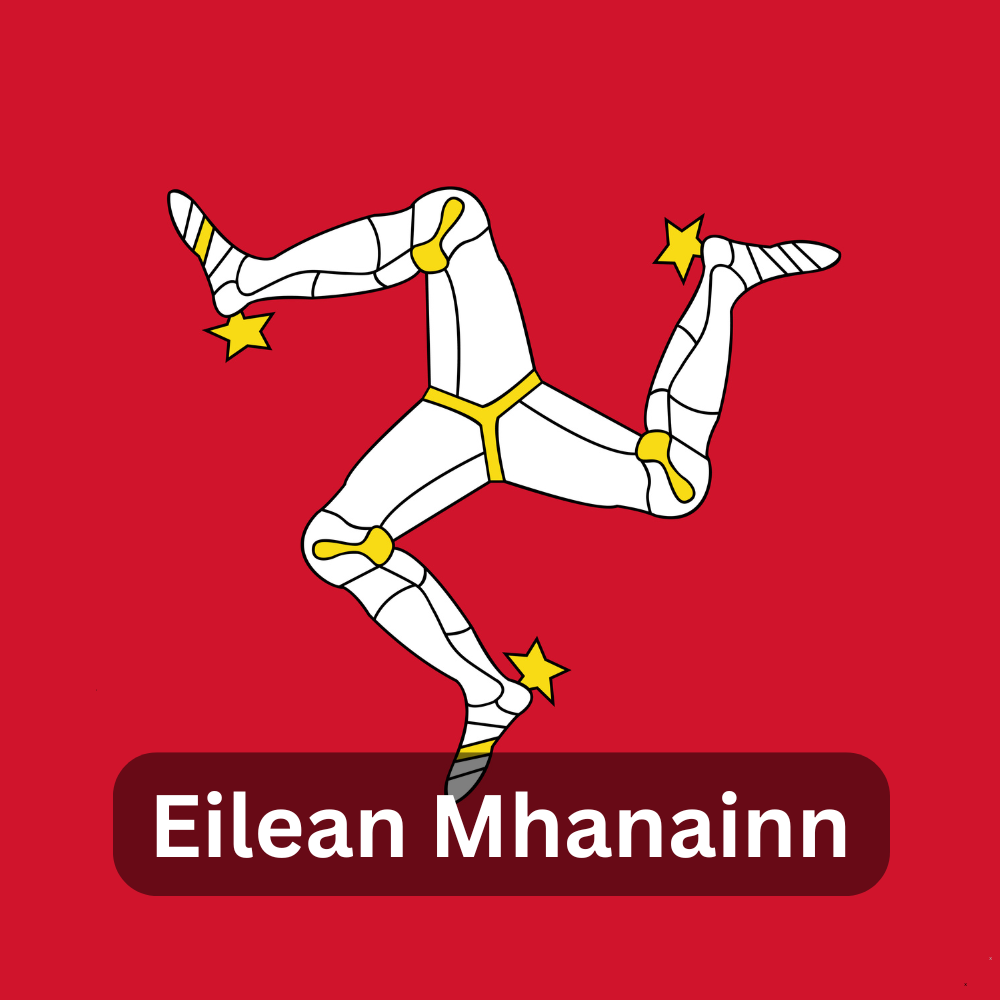
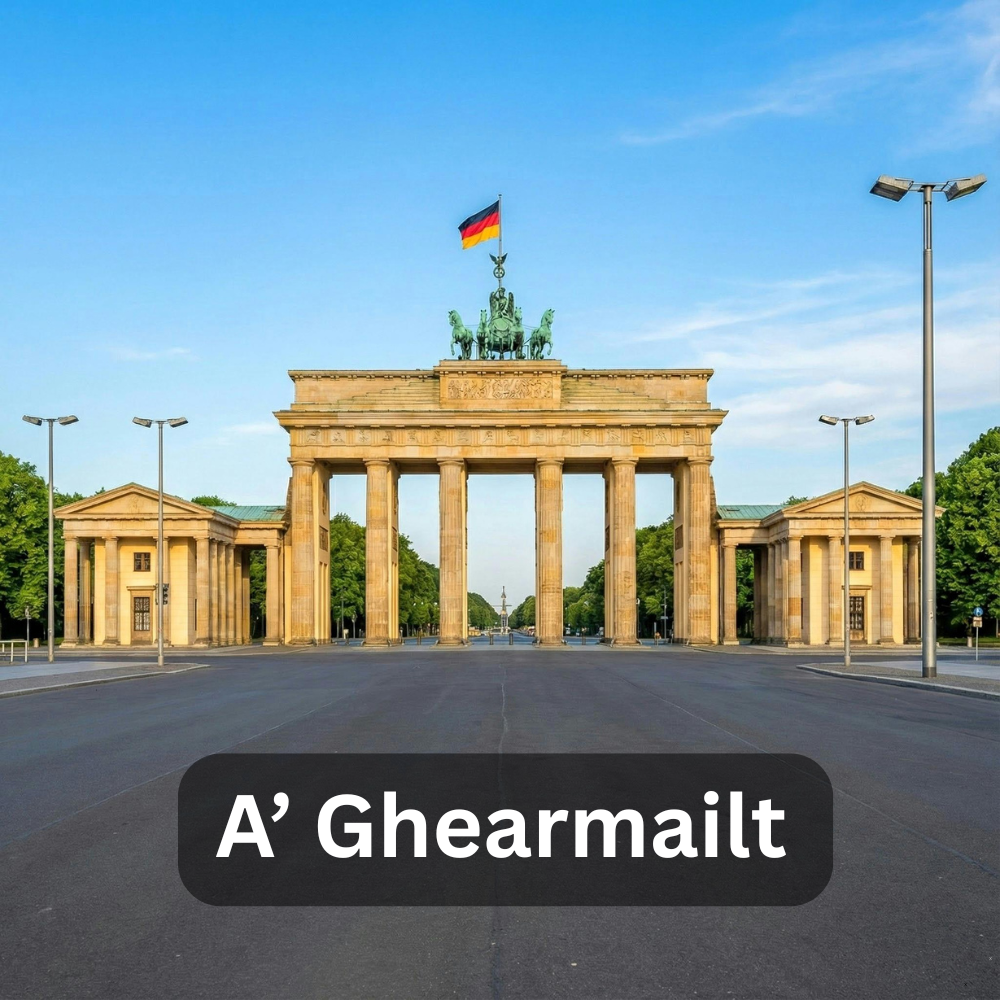
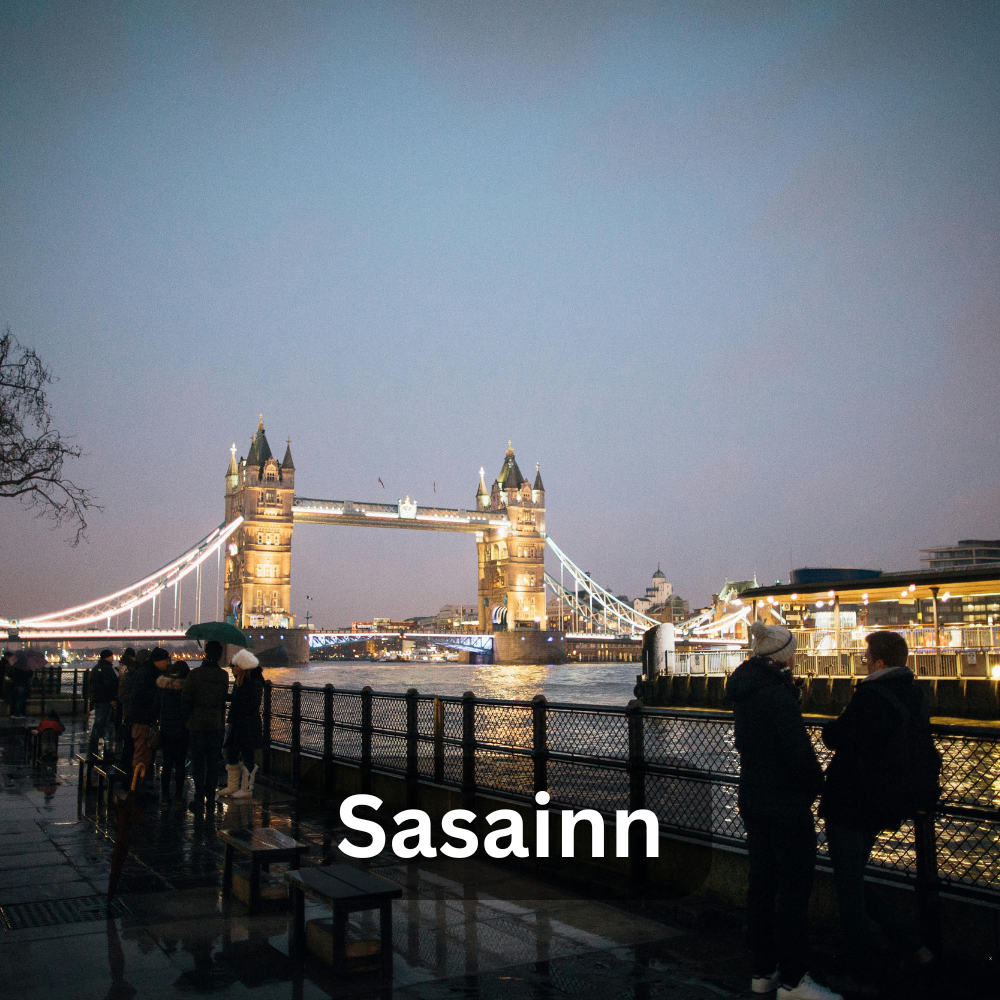
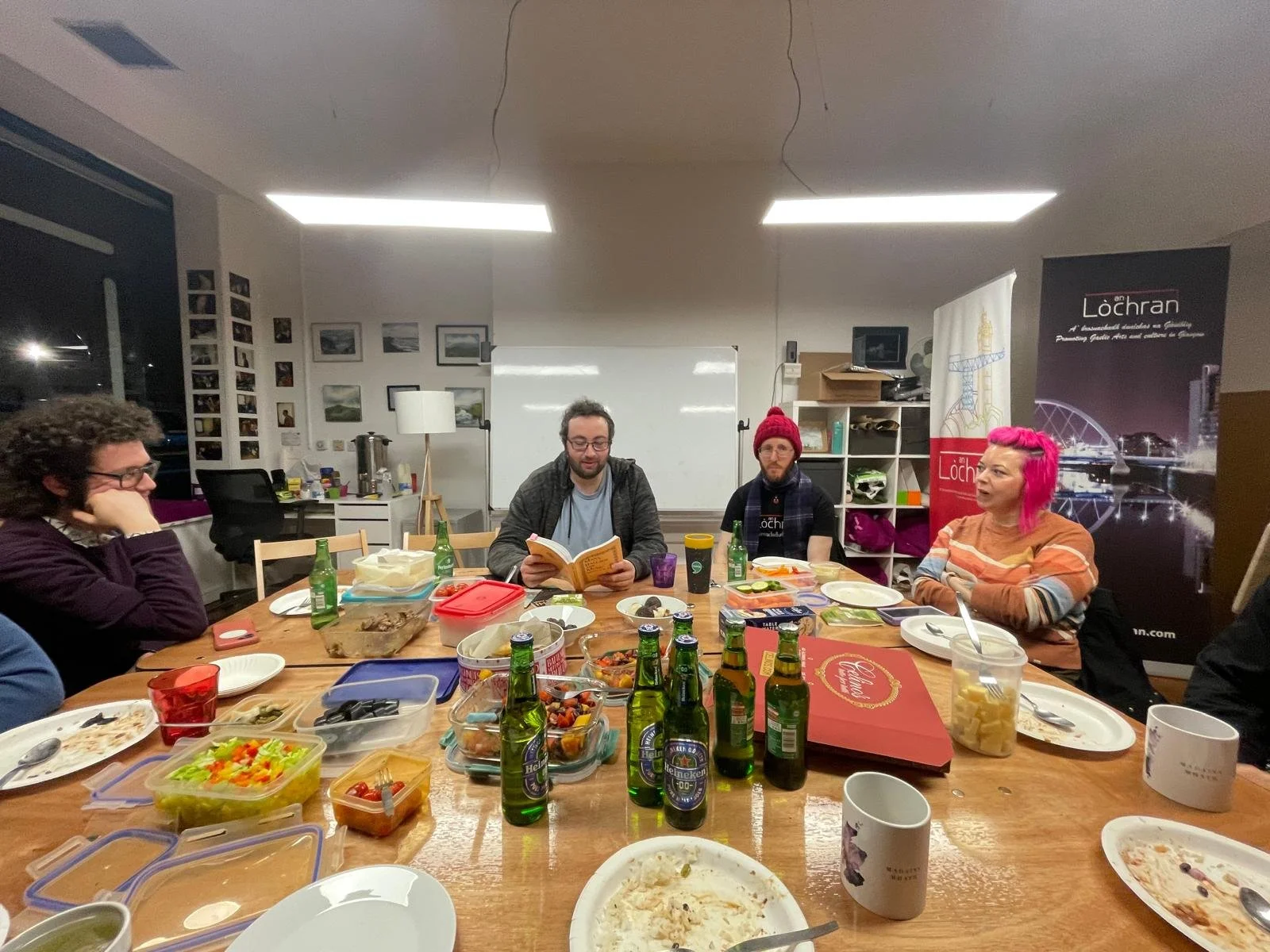
Leugh sinn cuideachd bàrdachd – no ghabh sinn òrain – ann an cearcall. Thòisich Gille-chrìost le dà òran à Eilean Mhanainn, eilean àraich fhèin. Leugh e dà phìos bàrdachd (a bha rudeigin na b’ ùire) ann an Cuimris na b’ fhaide air adhart air an oidhche cuideachd.
Sheinn Andy òran às a’ Ghearmailt air a bheil “Das Rätsel” (An Tòimhseachan) – òran le Subway To Sally à baile Photsdam. Na b’ fhaide air adhart, sheinn e “Sìos dhan an Abhainn” ann an Gàidhlig agus ann am Beurla (Down in the River to Pray), agus leugh e dà dhàn Ghàidhlig a sgrìobh e fhèin – “Chan ann gun strì” agus “A’ Bhratach na Samhla”.
’S e turas Mhichelle a bh’ ann às dèidh Andy. Ghabh Michelle òran à Coiria an toiseach – agus wow, bha e cho àlainn ’s a ghabhas 🙂 Ghabh i dà òran à Iapan cuideachd, ’s fear dhiubh car dùbhlanach ri sheinn! Tha Michelle na pàirt dhe Cheòlraidh Ghàidhlig Ghlaschu, no The GGs mar a th’ aig cuid orra 😁
Sheinn Melvin òran às na Tìrean Ìsle, agus thuig Mìcheal againn cuid dheth, leis gur ann às a’ Ghearmailt (an ath-dhoras!) a tha e. A bharrachd air sin, dh’innis Melvin dhuinn mu abairt no dhà a th’ aca ann an Duitsis.
A’ fantainn san sgìre sin dhen Roinn Eòrpa, fhuair sinn bhideo às a’ Ghearmailt a Tuath a rinn Steffi a dh’aona-ghnothach dhuinn 🙂 Tha i a’ bruidhinn Plattdeutsch sa bhideo, no Gearmailtis Ìochdarach, cànan a tha dùthchasach do dh’iomadh millean duine sa Ghearmailt! SEO am bhideo dhuibh. Hartliken Dank, Steffi 👏
Ghabh Mìcheal òran ann am Basgais, cànan eile anns a bheil ùidh mhòr aige, a thuilleadh air seann òran às an Spàinn (mas math ar cuimhne, ’s ann às an Spàinn a bha e!) ’S ann le taing do Mhìcheal a dh’ionnsaich sinn am facal amaladh-cainnte cuideachd – tongue-twister ann am Beurla. Seo eisimpleir a thug Mìcheal dhuinn ann an Cantonais, grunn mhìosan air ais:
黐線蜘蛛絲黐住枝樹枝 (chī sin jī jyū sī chī jyu jī syuh jī)
“tha lìon an damhain-allaidh chraicte a’ leantainn ri geug na craoibhe”
Riochdaich Moira Lombairdis air an oidhche – cànan fon mheur Ròmanach a th’ aig mu 3.5 millean duine agus a lorgas tu san Eilbheis no san Eadailt. Sheinn Isaac òran ann am Fraingis mu chaiptean Frangach, mus tug Laurence sinn air ais dhan Ghàidhlig le pìos bàrdachd goirid sa Ghàidhlig a thug e leis – “Acair san Talamh” le Beth Frieden. Bidh Beth fhèin còmhla rinn tro Sheachdain na Gàidhlig 2026, mar phàirt dhen Oidhche Bàrdachd againn. Nach sinne a tha a’ dèanamh fiughair ri sin – thig a-steach, ma tha ùidh agad!
Ach...fàgaidh sinn thu le eadar-theangachadh a rinn Gille-chrìost air Bella Ciao, òran Eadailteach mu shaorsa agus comhaireachd a tha ainmeil air feadh an t-saoghail. Chan eil sinn airson am pìos air fad a thaisbeanadh an seo, leis gur ann leis an eadar-theangadair a tha e, ach seo a’ chiad phàirt dhiubh. Fois air thalamh xxx
Soraidh slàn (Bella Ciao)
Moch ’s mi ’g èirigh tràth sa mhadainn,
O soraidh slàn, soraidh slàn, soraidh slàn slàn slàn;
Moch ’s mi ’g èirigh tràth sa mhadainn,
Is ann a thachair mi ris an nàmh.
O-chòn a charaid thoir mis’ air falbh,
O soraidh slàn, soraidh slàn, soraidh slàn slàn slàn;
O-chòn a charaid thoir mis’ air falbh,
Gur ann orm tha tuar a’ bhàis.
[Deutsch]
Am Samstag, den 21. Februar, haben wir im Lòchran den Internationalen Tag der Muttersprache gefeiert! Ziel dieses Tages ist es, die sprachliche und kulturelle Vielfalt zu fördern.
In diesem Sinne hat jeder Essen bzw. Getränke mitgebracht, die ihren Ländern oder Kulturen angehören. Oben siehst du die Länder, aus denen die gestrigen Gäste kommen (Schottland, die Schweiz, Isle of Man, Deutschland, England, China, die Vereinigten Staaten und die Niederlande).
Im Kreis haben wir auch Gedichte gelesen oder Lieder gesungen. Christopher hat mit zwei Liedern aus dem Isle of Man, wo er aufgewachsen ist, angefangen. Später am Abend hat er auch zwei Gedichte (die etwas neuer waren) auf Walisisch vorgelesen.
Andy hat ein Lied aus Deutschland namens „Das Rätsel“ gesungen – ein Lied der Band Subway to Sally, die aus Potsdam kommt. Später hat er Sìos dhan an Abhainn auf Gälisch und danach auf Englisch (Down in the River to Pray) gesungen, und et hat auch zwei selbstgeschriebene Gedichte namens Chan ann gun strì agus A’ Bhratach na Samhla vorgelesen.
Nach Andy war Michelle an der Reihe. Michelle hat ein Lied aus Korea gesungen – und wow, es war atemberaubend schön 🙂 Ebenfalls hat sie zwei Lieder aus Japan gesungen, wobei das eine ziemlich schwer zu singen war! Michelle ist auch Teil des Chors Ceòlraidh Ghàidhlig Ghlaschu, oder The GGs wie man sie so schön nennt 😁
Melvin hat ein Lied aus den Niederlanden gesungen, und unser Michael hat einiges davon verstanden, da er aus Deutschland (ist ja gleich um die Ecke!) kommt. Zusätzlich dazu hat Melvin einiges über einige Sprüche aus der niederländischen Sprache erklärt.
Wir sind in derselben Ecke Europas geblieben, indem wir ein Video aus Norddeutschland vorgespielt haben, die Steffi extra für uns gemacht hatte 🙂 Im Video spricht sie Plattdeutsch, eine Sprache, die in Deutschland mehrere Millionen Menschen sprechen! HIER findet ihr das Video. Hartliken Dank, Steffi 👏
Michael hat auf Baskisch gesungen – eine weitere Sprache, die ihn sehr interessiert – und danach hat er ein älteres Lied aus dem spanischen Raum (wenn wir uns richtig erinnern!) gesungen. Dank Michael haben wir auch das gälische Wort amaladh-cainnte gelernt – oder Zungenbrecher auf Deutsch. Hier ein Beispiel, von dem uns Michael selbst vor einigen Monaten erzählt hat:
黐線蜘蛛絲黐住枝樹枝 (chī sin jī jyū sī chī jyu jī syuh jī)
“das Gewebe der verrückten Spinne folgt dem Zweig des Baums”
Moira hat am Abend Lombardisch vertreten, eine römische Sprache, die von etwa 3,5 Millionen Menschen gesprochen wird und in der Schweiz oder in Italian zu finden ist. Isaac hat ein Lied auf Franzözisch über einen französischen capitaine gesungen, bevor Laurence uns zurück zum Gälischen geführt hat mit einem kurzen Gedicht auf Gälisch, das er mitgebracht hat – Acair san Talamh von Beth Frieden. Beth selbst wird während der World Gaelic Week 2026 bei uns sein, als Teil unseres gälischen Gedichtabends. Darauf freuen wir uns schon sehr, und falls du in Glasgow bist, schau mal vorbei!
Aber...wir bringen diesen etwas langen Bericht zu Ende mit einer Übersetzung des Liedes Bella Ciao, die Christopher gemacht hat. Das ist ein italienisches Lied über Freiheit und Widerstand, die weltweit bekannt ist. Wir möchten euch nicht die komplette Übersetzung präsentieren, da sie dem Übersetzer selbst gehört, aber hier für euch der Anfang. Frieden auf Erde. LG
Soraidh slàn (Bella Ciao)
Moch ’s mi ’g èirigh tràth sa mhadainn,
O soraidh slàn, soraidh slàn, soraidh slàn slàn slàn;
Moch ’s mi ’g èirigh tràth sa mhadainn,
Is ann a thachair mi ris an nàmh.
O-chòn a charaid thoir mis’ air falbh,
O soraidh slàn, soraidh slàn, soraidh slàn slàn slàn;
O-chòn a charaid thoir mis’ air falbh,
Gur ann orm tha tuar a’ bhàis.
[English]
On Saturday 21st February, we celebrated International Mother Language Day at An Lòchran! The aim of this day is to promote linguistic and cultural diversity.
In this respect, everyone brought food and/or drink with them associated with their native country or culture. Above you’ll see the eight countries that the evening’s attendees came from (Scotland, Switzerland, Isle of Man, Germany, England, China, the United States and the Netherlands).
We took it in turns to read poetry or sing songs. Christopher started us off, with two songs from the Isle of Man where he grew up. He also read two poems (more recent in nature) in Welsh later on in the evening.
Andy sang a song from Germany called Das Rätsel (“The Riddle”), written by the band Subway To Sally who originate from Potsdam. Later on he sang “Down in the River to Pray” in Gaelic (Sìos dhan an Abhainn) and then in English, and he read two Gaelic poems he’d written himself – Chan ann gun strì and A’ Bhratach na Samhla.
It was Michelle’s turn next. Firstly she sang a song from Korea – and wow, it sounded beautiful 🙂 She also performed two songs from Japan, one of which can be quite challenging to sing! Michelle is part of the Glasgow-based choir Ceòlraidh Ghàidhlig Ghlaschu, or The GGs as some nickname them 😁
Melvin sang a song from the Netherlands, and Michael understood some of it, given that’s he’s from Germany which is next door! Melvin also told us a little about an expression or two from the Dutch language.
Remaining in that corner of Europe, we played a video that we received from Steffi in North Germany, one she made especially for the evening 🙂 In the video she’s speaking Low German (Plattdeutsch), a language native to several million people in Germany. HERE it is for you. Hartliken Dank, Steffi 👏
Michael sang a song in Basque, another language he has a profound interest in, as well as an old song from Spain (as far as we remember!) And thanks to Michael, we learned the term amaladh-cainnte – or tongue-twister in English. Here’s an example in Cantonese that Michael himself introduced us to a few months ago:
黐線蜘蛛絲黐住枝樹枝 (chī sin jī jyū sī chī jyu jī syuh jī)
“the web of the crazy spider follows the tree branch”
Moira was representing Lombard – a language from the Romance language family spoken by around 3.5 million people and found in Switzerland and Italy. Isaac sang a song in French, about a French capitaine, before Laurence brought things back to a Gaelic base with a short piece of poetry he’d brought with him – Acair san Talamh by Beth Frieden. Beth herself will be with us during World Gaelic Week 2026, as part of our Poetry Evening. We’re very much looking forward to that, and we’d love to have you with us!
But…we shall part with ye now, in the form of a translation Christopher did of the song Bella Ciao, a world-renowned Italian song about freedom and resistance. We don’t want to post the full translation here, as it belongs to the translator, but here’s the beginning for you. Peace on Earth xxx
Soraidh slàn (Bella Ciao)
Moch ’s mi ’g èirigh tràth sa mhadainn,
O soraidh slàn, soraidh slàn, soraidh slàn slàn slàn;
Moch ’s mi ’g èirigh tràth sa mhadainn,
Is ann a thachair mi ris an nàmh.
O-chòn a charaid thoir mis’ air falbh,
O soraidh slàn, soraidh slàn, soraidh slàn slàn slàn;
O-chòn a charaid thoir mis’ air falbh,
Gur ann orm tha tuar a’ bhàis.